
Early Communication at Home: Makaton and Sign-Supported Language
Picture the scene: your child is trying to tell you something, but the words won’t come. They point, they grunt, they tug at your sleeve, and when you guess wrong, the tears start — for both of you. If this feels familiar, you’re not alone. Many families of children with Down’s syndrome experience this daily frustration, and it’s exactly why we want to talk about Makaton and sign-supported language. These approaches can transform early communication at home, giving your child a way to be understood long before speech fully develops.
Why Early Communication Matters for Children with Down’s Syndrome
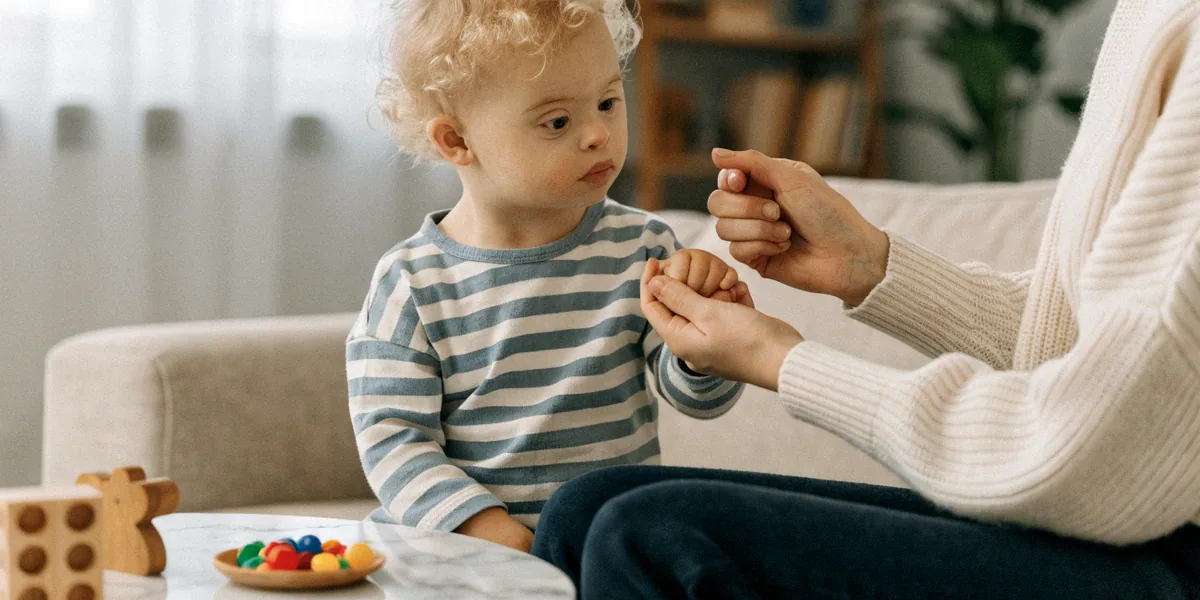
Communication is the foundation for everything — learning, friendships, behaviour, and emotional wellbeing. For children with Down’s syndrome in the UK, early communication support isn’t a nice-to-have; it’s essential. Many children with Down’s syndrome are strong visual learners, which means they absorb information more easily when it’s shown as well as spoken. Sign-supported approaches play directly to that strength.
The Down’s Syndrome Association, a leading UK charity providing information and support, consistently highlights early communication as one of the most important areas for families to focus on in the preschool years. Their guidance and helpline are invaluable resources for parents just starting out.
The link between communication and behaviour
When a child can’t express their needs, frustration builds — and that frustration often comes out as behaviour. Tantrums, hitting, or withdrawing aren’t “naughty” behaviour; they’re communication attempts when words aren’t available. Giving your child signs to use can dramatically reduce these flashpoints because they finally have a way to say “I want that,” “I’m finished,” or “I need help.”
How sign-supported language supports speech development
Some parents worry that signing will delay speech. In practice, the opposite tends to be true. Signs act as a bridge: your child learns that communication gets results, which motivates them to keep trying. Signs also slow adults down, giving children more time to process language and attempt their own spoken words alongside the sign.
What Is Makaton and How Does It Help?
Makaton is a language programme that uses signs and symbols alongside speech. It was developed in the UK in the 1970s and is now used by over 100,000 children and adults across the country. Crucially, Makaton is not a replacement for speech — it’s a bridge to it. You always speak as you sign, so your child hears the word, sees the sign, and gradually builds the connection between the two.
The Makaton charity, based in the UK, provides training, resources, and a free sign of the week, which many families use as a gentle way to build vocabulary together.
The difference between Makaton and British Sign Language (BSL)
British Sign Language is a different language from Makaton, though some signs overlap. BSL is a complete, independent language with its own grammar, used by the Deaf community. Makaton borrows signs from BSL but uses them in English word order alongside speech. If your child is Deaf as well as having Down’s syndrome, your professionals may recommend BSL instead — but for most families using Makaton, the two systems are distinct.
Research and evidence supporting Makaton for Down’s syndrome
Speech and language therapists across the UK routinely recommend sign-supported approaches for children with Down’s syndrome, and research consistently shows that signing supports rather than hinders spoken language development. Many NHS speech and language therapy teams build Makaton into early intervention plans from the toddler years onwards.
Getting Started with Makaton at Home
The good news is that you don’t need to learn hundreds of signs before you begin. Start small, stay consistent, and build from there.
Choosing your first signs
Pick signs for things your child actually cares about. Motivation is everything. Common first signs include:
- More — useful at mealtimes and during play
- Finished — helps end activities without tears
- Mummy / Daddy — familiar people are highly motivating
- Drink and food — meet basic needs
- Help — reduces frustration quickly
Making it part of daily routines
Attach signs to moments that happen every day: breakfast, bath time, bedtime stories. Say the word, make the sign, and give your child time to respond. Repetition in familiar contexts is how signs stick. Don’t test your child or withhold things until they sign — the goal is communication, not compliance.
Involving siblings and extended family
Brothers and sisters often pick up Makaton faster than adults, and involving them turns signing into a family activity rather than a therapy session. Grandparents, childminders, and nursery staff should all be shown your core signs so your child experiences consistent communication wherever they go.
Sign-Supported Language: Beyond Makaton
Makaton isn’t the only option, and many families use a mix of approaches depending on what works for their child.
Signalong and other UK systems
Signalong is another UK sign-supported system often used alongside Makaton. It follows a similar principle — signs used with speech — but has its own sign vocabulary and training structure. Some schools and speech and language therapy teams prefer Signalong, while others use Makaton. There’s no rule against combining them; what matters is consistency within your child’s environment.
Combining signs with visual supports
Signs work even better when paired with visuals: picture cards, objects of reference, or symbol boards. Many families use Makaton symbols alongside signs, and visual timetables at home can reduce anxiety about what’s coming next.
Overcoming Common Challenges
Every family hits bumps in the road. Here are the ones we hear about most often, and how to move past them.
When progress feels slow
Some children take months to use their first sign spontaneously. That’s normal, and it isn’t a sign that Makaton “isn’t working.” Look for small wins: a glance at your hands, a rough approximation of a sign, or reaching towards a symbol. Progress in communication is rarely linear.
Accessing training and support in the UK
Feeling self-conscious about signing in public is common, but confidence grows with practice. Many UK local authorities offer free Makaton taster sessions for families, and the Makaton charity runs online courses at various levels. Your child’s speech and language therapist can also advise on local training. The Down’s Syndrome Association provides workshops and information to help families navigate the system.
Real-Life Stories: How Families Use Makaton
We hear from families across the UK whose experience with Makaton has been genuinely transformative — not because it’s magic, but because it opens a door.
A parent’s perspective
One mother from Leeds told us her son’s first clear sign was “more” at 22 months. She cried in the kitchen. Another family described how their daughter, previously prone to meltdowns at nursery, began signing “finished” and “help” — and the tantrums dropped dramatically within weeks. These aren’t unusual stories; they’re what happens when a child finally has a voice.
Building a support network
The Down’s Syndrome Association runs regular workshops across the UK, and parent blogs and Facebook groups are a great source of inspiration and practical tips. Connecting with other families who sign can keep you motivated on the days when progress feels slow.
FAQ
Will using Makaton stop my child from learning to speak?
No. Evidence and decades of practice show that signing supports speech development rather than replacing it. Signs give your child a way to communicate while spoken language is still developing, which reduces frustration and builds confidence.
Do I need formal training before starting Makaton at home?
Not at all. You can begin with a handful of signs learned from the Makaton charity’s free resources. Formal training helps, and many UK local authorities offer free taster sessions, but you can start today with “more,” “finished,” and “help.”
Is Makaton the same as British Sign Language?
No. British Sign Language is a different language from Makaton, though some signs overlap. BSL is a full language with its own grammar used by the Deaf community, while Makaton uses signs alongside spoken English.
What if my child’s nursery or school uses Signalong instead?
That’s fine. Signalong is another UK sign-supported system often used alongside Makaton. What matters most is consistency — ask the setting which signs they use and mirror them at home where you can.
Where can I get support as a UK parent?
The Down’s Syndrome Association is a leading UK charity providing information and support, and the Makaton charity offers training and free resources. Your local speech and language therapy team and many local authorities also run sessions for families.
Early communication is a journey, not a race. Whether you start with Makaton, Signalong, or a blend of signs and visuals, the goal is the same: giving your child a way to be understood, reducing frustration, and building the foundations for speech. With support from UK charities, local services, and other families who’ve walked the same path, you’re not doing this alone — and every sign your child learns is a step towards their own voice.